


| Company Name | : | CHT TURKEY KIMYA SANAYİ VE TİCARET ANONİM ŞİRKETİ |
| Location | : | İSTANBUL / ESENYURT |
| Web Site | : | www.cht.com.tr |
| Tel | : | +90(212) 886 79 13 |
| Fax | : | +90(212) 886 79 20 |
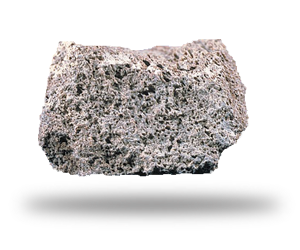
MINERALS PUMICE STONE Pumice is a light and porous type of pyroclastic igneous rock. It is formed from the lava that is full of gas. During the explosive volcanic eruptions, the liquid lava is ejected in the air. As the lava hurtles through the air, it cools and the gases escape from the rock, leaving it full of holes. Any type of igneous rock can form pumice rock, provide suitable eruptive conditions it get. It can be andesite, basalt, dacite or rhyolite. When larger amounts of gas are present in the rock, the resultant is a finger-grained variety of pumice, which is known as pumicite. Pumice is popular in making lightweight concrete and is used as abrasive, particularly in polishes and cosmetics exfoliants. When pumice is used as an additive for cement, its fine-grained version knowns as pozzolan is mixed with lime to form a light-weight, smooth, plaster-like concrete. This type of concrete has been in use since Roman times.
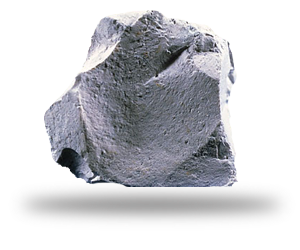
MINERALS KAOLIN & OTHER KAOLIN CLAYS Kaolin is a very common mineral. Kaolin is a soft, earthy, usually white mineral, produced by the chemical conditioning of aluminum silicate mineral. Kaolin is used in ceramics, medicine, bricks, coated paper, as a food additive, in toothpaste, as a light diffusing material in white incandescent light bulbs, and in cosmetics and as a filler in many other applications. Kaolin has even been used for spiritual and healing purposes! It is also being formulated as a spray to be applied to fruits and vegetables to prevent insect damage and infestation. The largest and most common use is in the paper industry. It is the main ingredient in creating "glossy" paper. Other materials such as calcium carbonate (which is an alternative material) competes with Kaolin as the most important source/ingredient for creating shiny paper.

MINERALS NATURAL STEATITE, TALC Talc is known for being the softest mineral on earth. It is number 1 on the Mohs hardness scale, and can be easily scratched by a fingernail. Talc is not commonly seen in collections, as it is usually uninteresting and fairly common, although a few deeply colored and crystallized examples are known and well sought after. Also very popular are the Talc pseudomorphs. Talc forms some very interesting pseudomorphs after many different minerals, and certain localities are known for the specific minerals replaced by Talc. Talc is a very important industrial mineral. Talc is crushed into powder to form talcum powder, which is the main ingredient in many cosmetics as well as some baby powders. Talcum powder was also used as a filler to prevent slipping in latex gloves, although its use is being replaced with corn starch which is safer for inhalation. Talc is highly resistance to heat and electricity, and is therefore used in electronics and as an insulator. It is also a filler material for paints, rubber and insecticides.